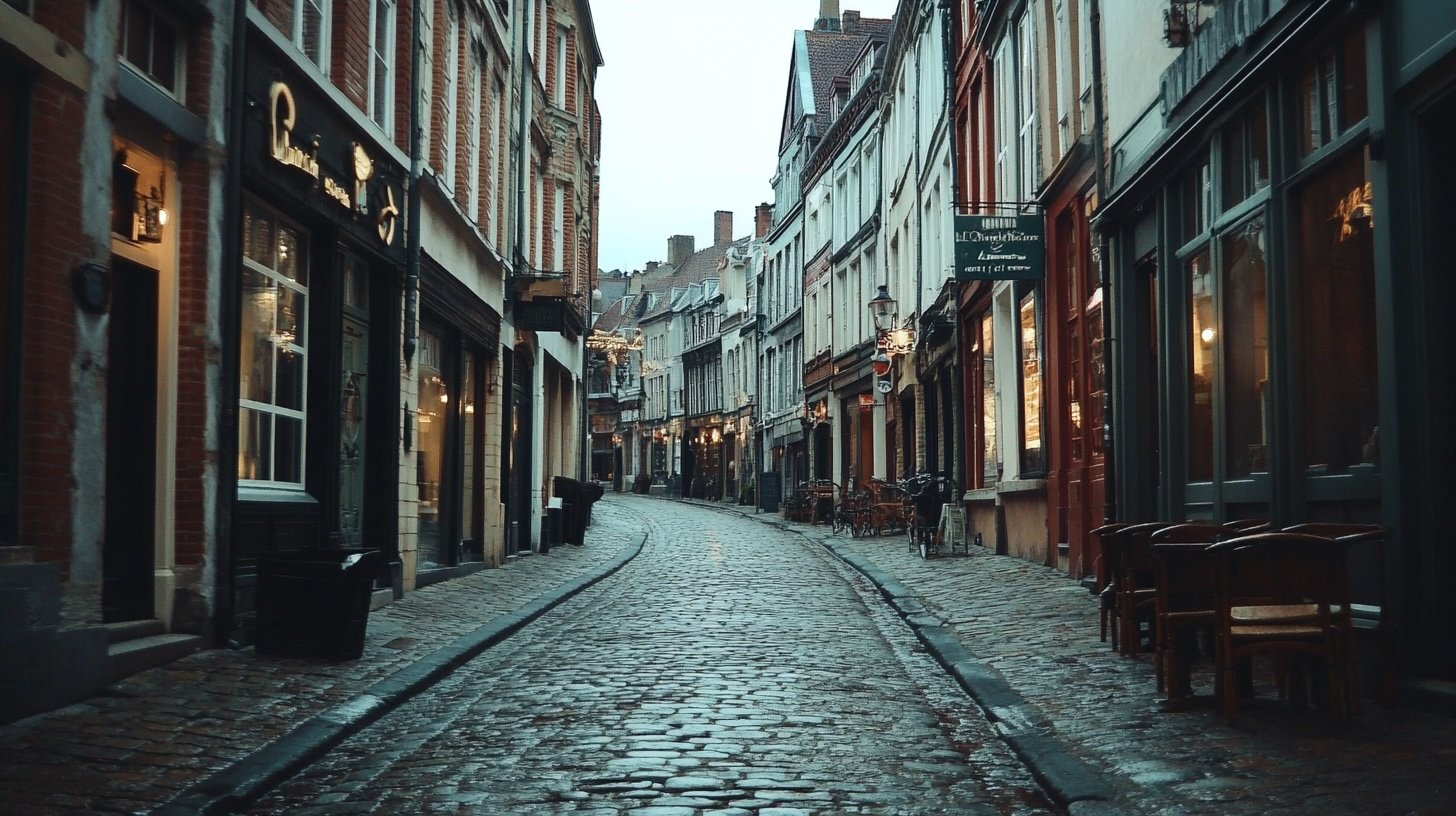
Lille doesn’t scream for attention. It smirks. Tucked just below Belgium, this French city has all the swagger of Paris with none of the attitude. Two days here and you’ll understand why locals stay smugly quiet about how good they have it — cobbled streets wrapped in Flemish façades, art hiding behind 17th‑century arches, and enough beer, cheese, and waffles to sabotage any fitness goals you once had.
Let’s start the clock.
The train rolls in at Gare de Lille‑Flandres, a stone’s throw from the slicker Lille Europe station. Both look like the kind of places you could either catch a Eurostar or start a revolution — which, given the city’s history, feels right. Drop your bag and head straight to the Grand Place, officially called Place du Général‑de‑Gaulle, because of course even the squares in France come with military titles. This is Lille’s living room, bordered by baroque buildings the colour of butter and caramel, with the Vieille Bourse — the old stock exchange — at its heart. Pop inside its courtyard to browse through second‑hand books, posters, and a few eccentrics who seem to live there full‑time.
A few steps away, the smell of fresh gaufres (Belgian‑style waffles, because here you’re closer to Brussels than Bordeaux) lures you towards Meert, the city’s oldest pâtisserie. Founded in 1761, it serves vanilla‑stuffed waffles so delicate they should come with a warning label. Eat one too fast and you’ll question your life choices until the next one arrives.
Wander into Vieux‑Lille — the Old Town — where pastel facades lean over cobblestones and every corner hides a boutique or a bistro. Rue de la Monnaie is your spine; every detour is a temptation. Stop at L’Illustration Café for a coffee, pretend you’re working remotely like the other beautiful people, then give up and order a local beer. Try the Ch’ti Blonde or a Page 24 — northern France brews with as much personality as their names.
Lunch happens at Estaminet Au Vieux de la Vieille, tucked into Place aux Oignons, which sounds ridiculous until you realise it’s one of the prettiest squares in the country. Wooden beams, lace curtains, and the kind of warmth you can’t fake. Order carbonnade flamande — beef stewed in beer — and fries you don’t share. Wash it down with another pint. Consider your cultural immersion complete.
The afternoon belongs to art. Palais des Beaux‑Arts is France’s second‑largest museum after the Louvre, though it’s refreshingly devoid of selfie sticks. Rubens, Goya, and Delacroix hang out here, looking as if they’ve been gossiping for centuries. Even the basement is worth a wander, filled with giant 18th‑century relief maps that once helped armies plot conquests. The irony of admiring them peacefully isn’t lost on anyone.
If you’d rather skip old masters for new ideas, head to Tripostal — a former mail sorting centre turned contemporary art space. The exhibitions rotate, but expect something clever, immersive, and possibly confusing. There’s always a café attached, because art appreciation burns calories, apparently.
By late afternoon, the light softens over Rue de Gand, where estaminets — the local word for rustic taverns — start filling up. This is your cue for apéro hour. Order a plate of maroilles cheese (the famously pungent local variety) with more beer, or brave a genièvre, the local juniper spirit that predates gin and could easily floor a Viking. Locals sip it with alarming nonchalance.
Dinner calls for something with flair but not fuss. Bloempot fits the bill — Flemish‑inspired, seasonal, and located in an old workshop. Chef Florent Ladeyn, a Top Chef alumnus, cooks like a man raised on both poetry and butter. The tasting menu changes constantly but never disappoints. Book in advance or risk being mocked by your own stomach.
After dinner, take a slow walk back through Vieux‑Lille. The streetlights hit the facades just right, the bars hum softly, and the smell of waffles somehow returns, like an encore. Stop at Le Dandy or La Capsule for a nightcap if you’re not ready to surrender yet.
Day two begins with caffeine and guilt. Brunch at Elizabeth’s Tea Rooms will fix both — think British comfort food filtered through French charm. Afterwards, climb the Belfry of the Hôtel de Ville. It’s UNESCO‑listed, because apparently even towers get awards now. From the top, Lille sprawls out like a well‑organised Lego set, red roofs stretching to the horizon.
If it’s Sunday, stroll to the Marché de Wazemmes. It’s part market, part carnival, part sociology lesson. Cheese vendors shout over spice sellers, Moroccan tea perfumes the air, and somewhere a man plays accordion without irony. Grab a galette saucisse and people‑watch. This is the real Lille — messy, noisy, brilliant.
For something slower, head to the Citadel Park. Designed by Vauban, Louis XIV’s favourite military engineer, the star‑shaped fortress now shelters joggers, families, and the occasional hungover tourist regretting genièvre. The adjacent Lille Zoo is small but charming, and the cafés nearby are perfect for lazy afternoon lounging.
When your energy dips, swing by Gare Saint‑Sauveur — another repurposed industrial space where locals hang out for exhibitions, DJ sets, or just to pretend they understand contemporary art. Grab a drink, browse the installations, and feel smug for not being in Paris.
As evening rolls in, take one last wander along Rue Royale. The lights reflect off wet cobbles, church bells echo in the distance, and you realise two days were just enough to fall for Lille’s understated charm — and just short enough to want more.
Before boarding your train, sneak in a final waffle from Meert. It’s practically a civic duty. Lille may not brag, but you’ll leave convinced it should.