Palma de Mallorca greets you like an old friend who knows how to party and still look graceful in the morning. The city sits by the sea, perfumed with salt, oranges and espresso. Two days here isn’t nearly enough, but it’s sufficient to understand why artists, exiled kings and slightly lost digital nomads keep ending up in this sunlit maze.
Start your first morning in Santa Catalina, the bohemian quarter where fishermen’s cottages now serve avocado toast. Stop by the Mercat de Santa Catalina to grab a cortado and a warm ensaïmada, Mallorca’s featherlight spiral pastry dusted with sugar, best eaten before it collapses under its own fluffiness. Wander to the waterfront to watch the yachts glinting like polished spoons, then stroll along the Passeig Marítim until La Seu Cathedral rises ahead – Gaudí’s touch is all over it, like a particularly elegant graffiti artist left loose in a Gothic church. Step inside and admire how light filters through the stained glass, splashing colours onto the limestone walls as if the sun’s been drinking rosé.
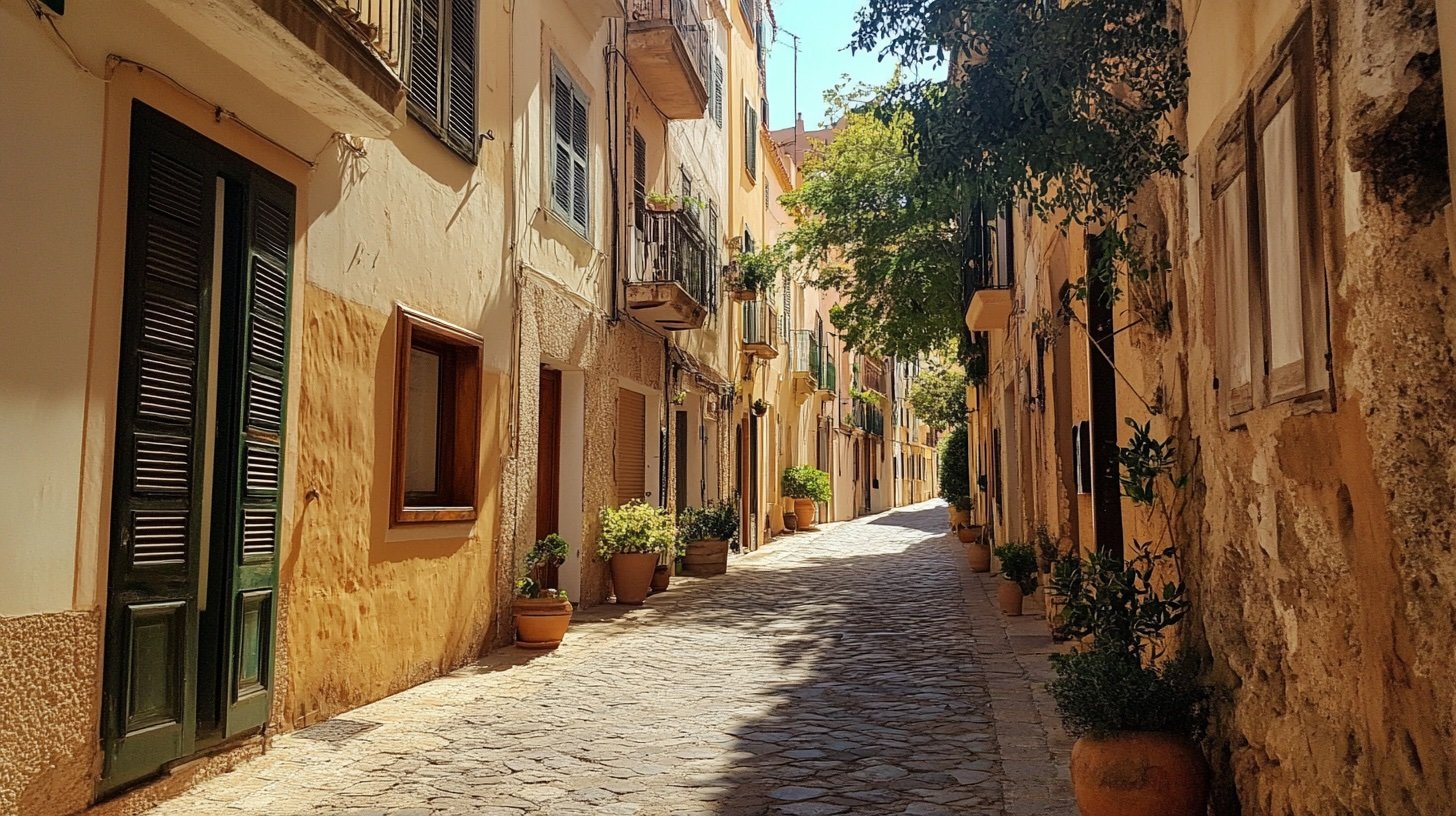
From there, lose yourself in the old town’s labyrinthine streets. The alleyways are lined with ochre buildings with green shutters and little balconies heavy with bougainvillaea. Peek into hidden patios; half of Palma’s charm lies behind closed doors. Visit the Arab Baths (Banys Àrabs), one of the few remnants of Moorish Palma – small, quiet and haunting, they hum with the city’s older rhythm. Stop at Plaça de Cort for a coffee under the ancient olive tree that looks like it’s seen more gossip than any local paper.
Lunch could happen at El Pilón, a classic tapas bar near Passeig del Born where locals order croquettes with the same seriousness others reserve for religious confession. Alternatively, try the more modern flair of Fera, where Mediterranean meets Asian without unnecessary fusion drama. After that, stroll down Passeig del Born itself, Palma’s most elegant boulevard, all shade and polished marble, lined with designer shops and the occasional stubborn pigeon who refuses to move.
Spend your afternoon at Es Baluard Museum of Modern and Contemporary Art. The building itself, a blend of medieval bastion and minimalist architecture, offers stunning views of the bay. Inside, Miró, Barceló and Picasso remind you that Mallorca has long attracted creative souls with sunlight and sangria. When the museum fatigue kicks in, retreat to the terrace café for an Aperol spritz and an unapologetic session of people-watching.
As the sun begins to lower, head towards the marina for dinner at The Boat House, where you can sip local white wine while watching the reflections dance on the water. Palma evenings are for wandering – walk through La Lonja, once the merchants’ hall, now the liveliest area of bars and restaurants. Find a table at Abaco, the legendary cocktail bar inside a 17th-century mansion filled with fruit pyramids, flowers, and faintly ridiculous opulence. Order something with rum and pretend you’ve just sold a galleon full of spices.
Next morning, start with a sunrise walk along Playa de Palma. The Mediterranean at dawn is almost too perfect: fishermen returning, joggers pretending to be locals, and the faint smell of coffee drifting from beach bars setting up for the day. Have breakfast at the Hotel Es Princep rooftop terrace – the view over the old walls makes you feel like you’re part of a Renaissance painting, only with better Wi-Fi.
Then it’s time to venture out. Rent a scooter and head west towards Valldemossa, a village tucked in the Tramuntana Mountains. The ride takes you through olive groves and cypress alleys that seem plucked straight from an oil painting. In Valldemossa, wander cobbled lanes where Chopin once battled the damp and composed some of his moodiest music. Visit the Charterhouse monastery and then stop for coca de patata, a soft potato bun dusted with sugar, best paired with thick hot chocolate. Yes, even in summer.
Continue to Deià, the tiny cliffside village beloved by writers and artists, including Robert Graves, who lived here for decades. Have lunch at Ca’s Patró March, perched right over the sea – the grilled octopus is as divine as the view. Don’t expect efficiency; here, lunch is a philosophy. After that, wind down to Cala Deià for a swim in turquoise water so clear it feels digitally enhanced.
Drive back towards Palma in the late afternoon, stopping at Mirador de Sa Foradada for the iconic sunset over the hole-punched rock. Bring a bottle of local Binissalem wine and toast the island’s peculiar talent for effortless beauty.
Back in the city, dine at Tast Club – hidden behind an unmarked door like a speakeasy for people who take food seriously. The tasting menu plays with local produce: sobrasada, Mallorcan lamb, and seafood so fresh it may have texted the chef earlier. After dinner, stroll through the narrow streets glowing under lantern light until you find yourself at Plaça Major, where musicians play and people linger as if time itself is on holiday.
For your final morning, treat yourself to a lazy brunch at Mama Carmen’s in Santa Catalina. The coffee’s perfect, the shakshuka unreasonably good, and the vibe gently smug in the best possible way. If you have an hour to spare, walk up to Bellver Castle, a circular fortress with panoramic views over Palma and the sea. It’s one of Europe’s few round castles and a great spot for smug reflection on how well you’ve spent your two days.
Before heading to the airport, pick up some local delicacies – sobrasada sausage, almond cake, Flor de Sal sea salt, or a bottle of hierbas liqueur. The security staff have seen it all before. Palma will wave you off with that easy charm of a city that doesn’t need to try too hard. And you’ll promise to return, knowing full well that next time, 48 hours won’t even begin to cover it.