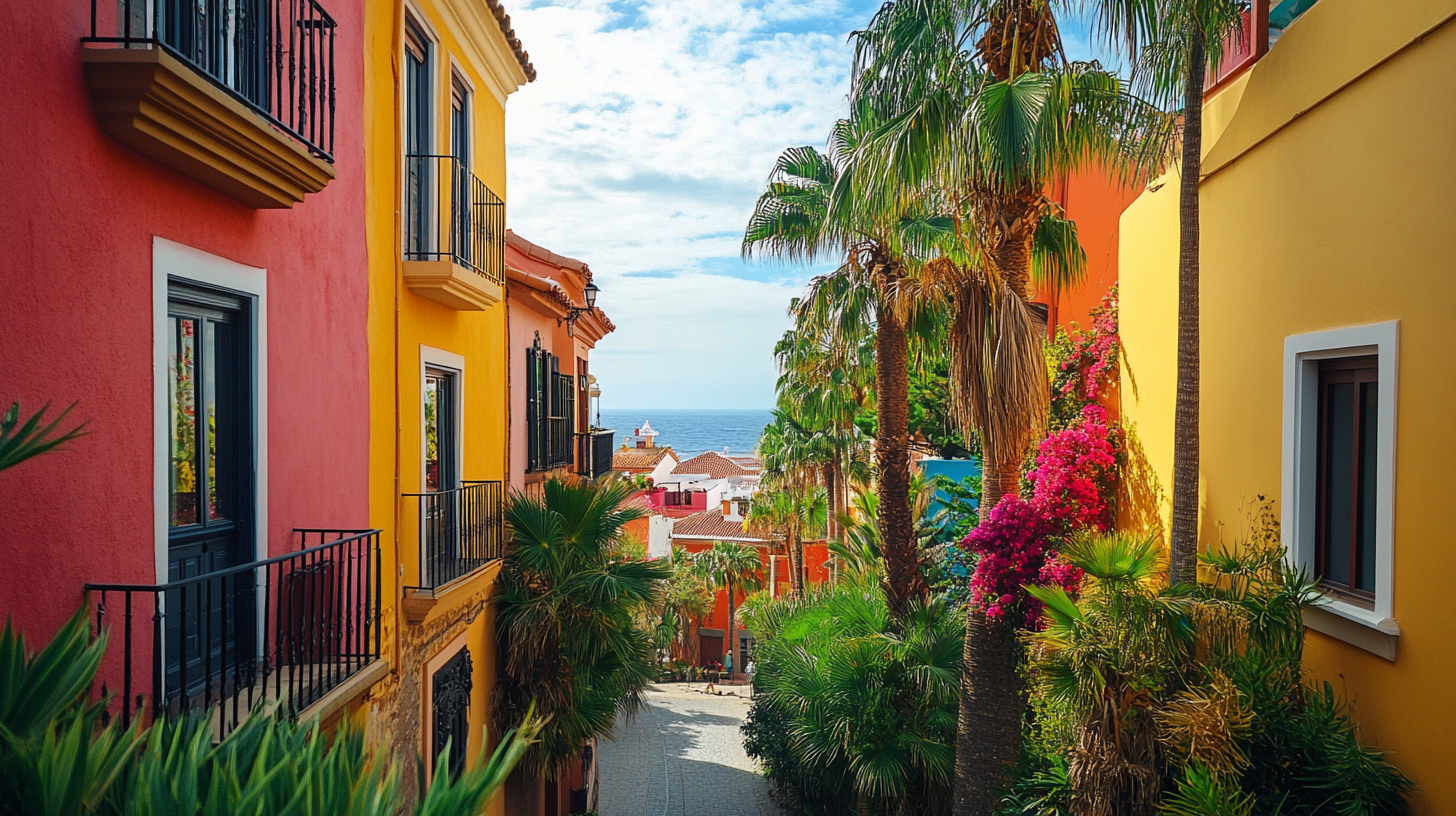
You arrive in Tenerife and the island immediately smells like adventure mixed with sunscreen. The Atlantic air feels warm but not sticky, the sky looks suspiciously blue for a Monday morning, and even the rental car hums with the sort of optimism you don’t get back home. Two days may not sound like much, but on this island you can fit in volcanoes, black‑sand beaches, colonial towns, and possibly a sunburn that will make you look like you’ve just fought a dragon.
The first day begins with caffeine and reckless ambition. The plan is to drive straight into the middle of the island where Mount Teide rules the skyline. The road climbs through pine forests that smell of caramel and lava dust. Soon the landscape turns otherworldly: a place where rocks have frozen mid‑eruption, and the silence feels like a movie set. The cable car station sits at 2,356 metres, and even before you step in, you start rehearsing your brave face. The ride takes you above clouds and into a world that looks half Mars, half cathedral. The summit itself needs a permit, but the upper station already serves views that could convert atheists. Take photos, then more photos, then one pretending to be an explorer who’s lost Wi‑Fi signal for weeks.
When hunger wins, descend towards La Orotava, a town so pretty you wonder if it’s been Photoshopped. Wooden balconies lean over cobbled streets, and the air smells faintly of coffee and old stone. Casa de los Balcones is the show‑off here: a 17th‑century mansion with carved woodwork so detailed you expect cherubs to appear and start gossiping. Grab lunch at one of the local guachinches — informal family restaurants where menus read like love letters to potatoes. Order papas arrugadas with mojo verde, grilled cheese with palm honey, and try not to think about the cholesterol.
The road slides down to Puerto de la Cruz where the Atlantic starts flexing its muscles again. The town buzzes with sea spray and the slow clink of cutlery on terraces. Plaza del Charco, the heart of town, invites you to linger. Then wander towards Lago Martiánez, a dreamy complex of saltwater pools designed by artist César Manrique. Think swimming pool meets art installation meets sun‑lounger utopia. The volcanic rocks, turquoise water and white walkways form a scene that makes you forget about returning flights. Stay for sunset when the horizon turns molten orange behind Teide.
Evening arrives with hunger again. Head to La Ranilla district for dinner — seafood straight from the ocean, Canarian wines that taste like sunshine, and locals chatting loudly enough to replace background music. Puerto de la Cruz at night feels like a good secret: a town that knows it’s gorgeous but doesn’t try too hard.
Next morning, resist the temptation to sleep in. Grab coffee, pack swimwear, and drive west towards Los Gigantes. The cliffs appear long before the town does, rising 600 metres from the sea like the island’s stern grandparents. Take a boat tour and watch dolphins and pilot whales slice through the waves with casual arrogance. You can swim off the boat or just dangle your feet, pretending this is your natural habitat. Back on shore, grab grilled fish at one of the cliff‑view restaurants, ideally something you can’t pronounce.
From here, the road starts twisting inland towards Masca. The drive is a sequence of bends, gasps and breathtaking drops. Each turn opens a new postcard: terraced slopes, green ravines, and houses clinging to cliffs as if terrified of heights. Masca village looks suspended in a dream — a few stone houses, a tiny church, and a view that could silence a karaoke bar. Some people hike down to the sea from here, others just sip fresh juice and wonder how on earth anyone decided to build a village here.
If energy still remains, drive across to the east coast and stop by the Pyramids of Güímar. They aren’t exactly Egyptian but they have their charm, especially if you like mysterious lava structures built by people who clearly had spare time and volcanic rock to waste. Continue to El Médano, a windsurfer’s paradise with a relaxed vibe and waves that gossip constantly with the breeze. Nearby lies Cueva del Hermano Pedro, a small cave‑chapel dedicated to the Canary Islands’ only saint, tucked into the volcanic rock. It’s humble, quiet and unexpectedly touching after all the adrenaline.
As evening creeps in, head north‑east to Santa Cruz de Tenerife. The city has a sophisticated pulse, a mix of port bustle and palm‑lined promenades. Stroll through Parque García Sanabria, where tropical plants behave like they’re auditioning for a botanical musical. Continue to the Auditorio de Tenerife Adán Martín, a sweeping white building that looks like it might fly away at any moment. Locals say it’s their Sydney Opera House, only sunnier and without the kangaroos.
Dinner choices here are dangerously good. Try a rooftop spot near the harbour for tapas and wine as the city lights blink on. The local cheese, goat’s or otherwise, deserves applause. After that, if you still have fuel left, drive back towards Teide’s slopes for a bit of stargazing. Tenerife’s night sky ranks among the clearest in the world. Away from city lights, constellations appear so bright you start questioning all your life choices that didn’t involve astronomy.
If you’re lucky enough to squeeze in a detour, make it San Cristóbal de La Laguna. The town looks like it has been time‑travelled from the 16th century, with pastel houses, iron balconies and courtyards filled with bougainvillea. The streets run perfectly straight — early urban planning at its finest — and every doorway hides a new coffee smell. It’s also a UNESCO site, which basically means everyone wants to photograph it and no one knows where to stand.
Another alternative: drive into the misty forests of Anaga Rural Park in the island’s north‑east. This is Tenerife’s wilder soul, a labyrinth of laurel trees, hidden villages and viewpoints with names you can’t pronounce but won’t forget. Mirador de Cruz del Carmen gives a panorama that makes you feel both small and smug. Down at the coast, black‑sand beaches like Benijo turn sunsets into religion.
A more eccentric stop lies in Icod de los Vinos, home to the legendary Drago Milenario, the dragon tree that’s supposedly a thousand years old. It looks like something Tolkien might have sketched on a bad day — gnarled, majestic, and slightly haunted. The town itself, full of wine shops and sleepy squares, smells like both history and hangovers.
By now the 48 hours are almost up. You’ve crossed microclimates, eaten your weight in mojo sauce, and probably shouted ‘wow’ more times than your travel companions can bear. Tenerife doesn’t just show off its landscapes; it parades them like a peacock that knows exactly how good it looks. The island takes you from lunar deserts to rainforest humidity within an hour and somehow makes it all seem perfectly reasonable.
On your last evening, take one last swim — maybe at Playa de las Teresitas, the golden‑sand beach near Santa Cruz. The sand comes from the Sahara, smuggled here decades ago to give locals a taste of exotic luxury. Sit with your feet buried, watch the light fade, and let the sea whisper one last salty insult about having to leave tomorrow. Tenerife has that effect: it teases, dazzles, then quietly steals your heart while you’re too busy choosing the next tapas plate.
Tenerife Restaurants Worth visiting
El Rincón de Juan Carlos (La Caleta / Costa Adeje)
Run by the Padrón brothers, this two-Michelin-star restaurant is a shrine to local ingredients and precision. Expect dishes that look like art projects but taste like comfort food reimagined by geniuses.
Nub Restaurante (San Cristóbal de La Laguna)
Inventive, intimate and slightly theatrical. The menu fuses Latin American and European flavours with confident flair — the sort of place where even the bread has a backstory.
Kensei (Hotel Bahía del Duque, Costa Adeje)
Japanese cuisine through a Canary-Island lens. The setting is elegant yet unpretentious, the sushi immaculate, and the cocktails deserve their own Michelin star.
Qapaq (Los Cristianos)
Peruvian fine dining meets Atlantic freshness. Expect ceviche that could make a poet cry and presentation so meticulous you hesitate to touch it.
La Cúpula (Hotel Jardines de Nivaria, Costa Adeje)
Classic French technique meets volcanic produce. Think lobster bisque followed by Canarian black pork with a side of serenity.
Etéreo by Pedro Nel (Santa Cruz de Tenerife)
Refined Mediterranean dishes with local soul, served in a warm, contemporary space. The kind of place where you forget your phone exists.
El Aguarde (Santa Cruz de Tenerife)
Traditional flavours done right. Expect slow-cooked meats, rich sauces, and desserts that make you briefly reconsider your diet.
Malaka (La Laguna)
An elegant hideaway in historic La Laguna where fusion cuisine meets flawless service. Locals go for anniversaries; travellers go because they heard whispers.
Almar Tenerife (Costa Adeje / Puerto Colón)
Ocean views, chilled white wine and the sound of waves syncing with your appetite. Seafood dominates here — think grilled octopus, Canarian prawns, and sunsets on a plate.
La Verdulería (Santa Cruz de Tenerife)
A modern plant-based restaurant that could convert even steak enthusiasts. Bright, creative, and full of surprising flavour combinations — a perfect palate cleanse after days of indulgence.