Sofia is one of those European capitals that refuses to behave properly. It has Roman ruins under a metro station, Ottoman mosques beside socialist monuments, grand Orthodox domes flashing like jewellery, and a mountain sitting at the end of the street as if someone forgot to move the scenery after filming. It doesn’t shout like Rome, preen like Paris or charge you Venice prices for the privilege of standing near a canal. Sofia simply gets on with being layered, odd, practical, warm and slightly chaotic. Quite refreshing, really.
Forty-eight hours gives you enough time to see the historic centre, eat dangerously well, wander through parks, visit a UNESCO-listed medieval church, and escape towards Vitosha Mountain before returning to town for wine, rakia and a final walk under yellow streetlights. Wear comfortable shoes, carry some cash for smaller places, and don’t plan your day with military precision. Sofia rewards curiosity, but punishes people who think every pavement should behave like Switzerland.
First morning: start where Sofia hides its oldest self
Begin at Serdika metro station, because few cities offer such a theatrical arrival. You emerge among the remains of ancient Serdica, the Roman city that sat beneath modern Sofia long before cafés, trams and people carrying oat milk lattes joined the story. The archaeological complex around the station and Largo area gives you Roman streets, foundations and fragments sitting almost casually below the traffic. It feels less like a museum and more like the city accidentally left its ancient underwear showing.
The location also works brilliantly if you arrive from the airport. Sofia Airport’s metro station sits by Terminal Two, and the airport confirms a free shuttle links the terminals, so the centre feels pleasingly easy to reach without negotiating with taxi drivers while tired and suspicious.
From Serdika, walk to Sveta Nedelya Church, a calm and heavy presence in the middle of the city. Then continue to the little Church of St George Rotunda, tucked inside a courtyard behind the Presidency. This red-brick survivor dates back to the Roman period, and its position feels almost comical: ancient Christianity boxed in by government buildings, hotels and the modern city’s paperwork. Look up, look around, and enjoy the sense that Sofia never throws anything away; it just builds around it and hopes everyone can still squeeze through.
For coffee, head towards Saborna Street or the streets around Slaveykov Square. Sofia has a strong café culture, and the centre gives you plenty of places for a proper espresso, a pastry and a sit-down while you pretend you planned this relaxed pace all along. Try banitsa if you see it fresh: flaky pastry, white cheese, sometimes egg, and enough buttery confidence to cancel any unrealistic health goals you brought from home.
Late morning: icons, domes and Bulgaria’s big visual moment
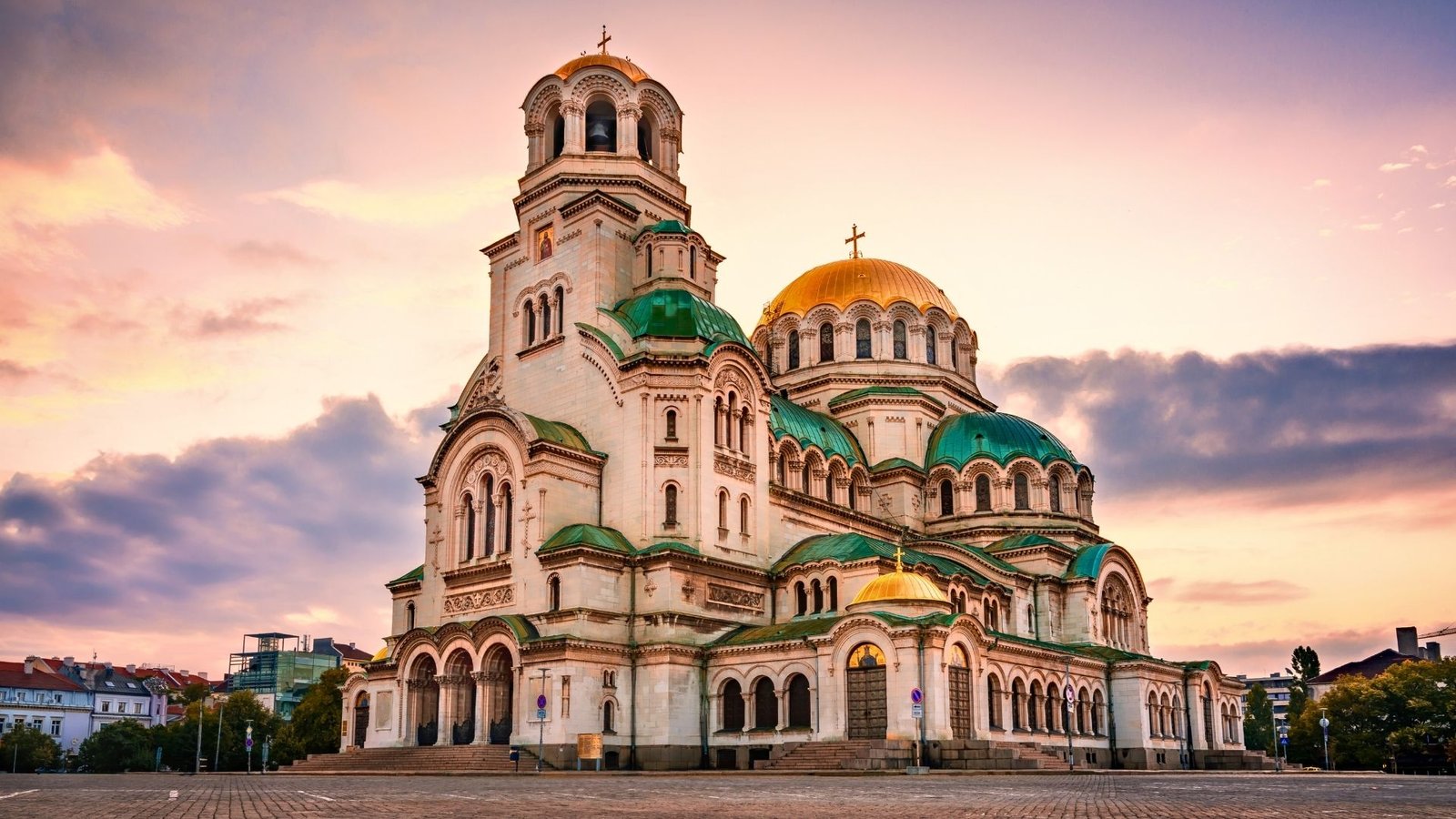
Walk east towards Alexander Nevsky Cathedral, Sofia’s great postcard monument. You’ll see its domes before you arrive, which helps, because the cathedral has the visual subtlety of a royal wedding cake with religious authority. Built in Neo-Byzantine style, it dominates its square with gold and green domes, pale stone arches and a scale that makes even casual visitors instinctively lower their voices.
Go inside if services allow. The main cathedral usually welcomes visitors, though it remains an active place of worship, so treat it accordingly. The crypt beneath the cathedral houses a major collection of Orthodox icons, and it adds depth if you want more than a quick photograph and a “yes, very impressive” nod. Opening and ticket details can change, so check locally before building your entire personality around seeing the crypt at a fixed time. Visitor information commonly lists the main cathedral as open daily, with the crypt museum requiring a separate ticket.
Afterwards, circle the square rather than rushing off. Nearby you’ll find St Sofia Church, one of the city’s most important early Christian sites, and the Monument to the Unknown Soldier. This area also gives you the antique and flea market near the cathedral, where icons, medals, old cameras, coins and Soviet memorabilia appear on tables with varying degrees of historical dignity. It’s not huge, but it suits Sofia: serious history, casual selling technique.
For lunch, aim for something Bulgarian rather than another generic sandwich of international disappointment. Look for shopska salad, grilled meats, bean soup, kyufte, kebapche, or stuffed peppers. If you want a more polished meal, the streets around the National Theatre and Rakovski Street have good options; if you want quick and local, follow office workers rather than tourists.
First afternoon: theatre, gardens and the city’s elegant face
Spend the early afternoon around the Ivan Vazov National Theatre and City Garden. The theatre façade brings the sort of neoclassical confidence that tells you a nation had things to prove, and the garden in front gives Sofia one of its best people-watching spots. Chess players, students, pensioners, families, dogs, and visitors all share the space with impressive informality. Nobody seems especially surprised by anything, which makes it more enjoyable.
From here, walk down towards the National Art Gallery and the former Royal Palace. Depending on your mood, pop inside for Bulgarian art, or keep moving towards the Russian Church of St Nicholas. Its golden onion domes add another layer to Sofia’s skyline, because apparently the city decided one type of dome would lack ambition.
Then head west towards the Central Mineral Baths building, now home to the Regional History Museum of Sofia. The building alone deserves attention: striped, ornate, slightly theatrical, and rooted in the city’s mineral-water culture. The official museum site notes that the former Central Mineral Bath has housed the Museum of History of Sofia since 2015, with seasonal opening hours listed for the main building.
Do go in if you have the energy. The museum gives context to the city without demanding a whole day. You’ll leave with a better sense of Sofia’s Roman, medieval, Ottoman, royal and modern identities, which sounds like a lot because it is. Sofia doesn’t do neat categories. It prefers layers, overlaps and the occasional architectural argument.
Outside the museum, look for the mineral-water fountains where locals still fill bottles. This small ritual says more about Sofia than many grand monuments. Hot mineral water has mattered here for centuries, and the fountains keep that relationship practical rather than decorative. Watch people queue with plastic bottles and containers, and you’ll understand that some traditions don’t need gift shops.
First evening: Vitosha Boulevard, dinner and a little Balkan theatre
As late afternoon settles in, walk to Vitosha Boulevard, Sofia’s main pedestrian drag. It has shops, cafés, restaurants, street performers, and views towards Vitosha Mountain when the weather behaves. Yes, it’s touristy. Yes, locals complain about such places. Yes, you should still walk it, because every city has a stage where everyone pretends not to be performing.
This stretch works well for a relaxed drink before dinner. Order Bulgarian wine if you see Mavrud, Melnik or Rubin on the list. Bulgaria has a long wine tradition and produces far more interesting bottles than many visitors expect, probably because the country hasn’t spent the last twenty years shouting about it on lifestyle television.
For dinner, choose a traditional mehana-style restaurant if you want rustic Bulgarian cooking, music and wood-heavy décor. Try kavarma, slow-cooked meat with vegetables; tarator, cold yoghurt and cucumber soup if it’s warm; or banitsa-style starters if you missed pastry earlier and feel emotionally incomplete. Rakia may appear. Treat it with respect. It looks innocent, arrives in small glasses and then quietly rearranges your evening plans.
End the night with a slow walk back through the centre. Sofia after dark has a gentler atmosphere than many capitals. The cathedral glows, trams clatter, and the city feels lived-in rather than staged entirely for visitors. That may be its greatest charm.
Second morning: Boyana Church and the medieval masterpiece hiding near the mountain
Start early and head south-west to Boyana Church, one of Sofia’s most important sites and easily the star of your second day. It sits at the foot of Vitosha Mountain in the Boyana district, away from the main centre. Taxis work well, or you can combine public transport and walking if you enjoy logistics as a leisure activity.
Boyana Church matters because of its medieval frescoes, especially the thirteenth-century paintings that show striking realism and emotional detail. UNESCO lists the church as a World Heritage Site, and visitor numbers inside remain controlled to protect the fragile interior. The official visitor information gives daily opening hours, with seasonal times and checkout times, so check before going, especially outside summer or around holidays. (Boyana Church)
The visit itself won’t take long, but don’t mistake short for minor. You enter in small groups, stand inside a compact space, and realise that medieval art can feel startlingly alive when you meet it at close range. Faces, gestures, drapery, saints, donors: the walls speak with a sophistication that makes many later “dark ages” clichés look a bit lazy.
After the church, decide how energetic you feel. If the weather looks good and your shoes can cope, continue towards Boyana Waterfall. Sofia’s official tourism site describes Boyana Waterfall as the largest waterfall in Vitosha, around 25 metres high and especially strong in spring. The walk can feel steeper than a casual city-break stroll, so don’t attempt it in delicate footwear or with the confidence of someone who has mistaken a mountain trail for a shopping arcade.
If you prefer a softer morning, stay around Boyana and enjoy the mountain air from lower ground. The point here is not to conquer nature before lunch. The point is to realise how unusual Sofia is: a capital where you can move from Roman ruins to medieval frescoes to forested mountain slopes in the space of a morning.
Second lunch: back to the centre, with proper appetite
Return to central Sofia for lunch. At this stage, you’ve earned something hearty. A good choice would be a restaurant serving Bulgarian classics near Rakovski Street, Shishman Street or the Doctor’s Garden area. These neighbourhoods give you a pleasant balance: central, lively, but less obvious than sitting directly on Vitosha Boulevard watching everyone else watch everyone else.
Order mish-mash if you want a comforting mix of eggs, peppers, tomatoes and white cheese. Try sarmi if available, vine or cabbage leaves stuffed with rice and meat. Or choose grilled trout, roasted vegetables and a glass of local white wine if you want to pretend the morning hike happened for wellness reasons rather than sightseeing greed.
Leave space for dessert. Garash cake, a Bulgarian chocolate and walnut cake, has enough density to stop conversation briefly. This can be useful if travelling with someone who has started reading aloud from every plaque.
Second afternoon: socialist Sofia, street life and quieter corners
Use your second afternoon to understand twentieth-century Sofia. Walk towards the former Communist Party headquarters around the Largo, then look at the surrounding government buildings with their monumental proportions. This is Sofia’s grand socialist-era stage set, although the Roman ruins below it complicate the message nicely. Empires come, empires go, someone eventually installs a metro.
From there, continue towards the National Palace of Culture, known locally as NDK. The building and surrounding park represent late socialist urban ambition on a heroic scale. Depending on your taste, it may look impressive, severe, fascinating or like a concrete spaceship that took a wrong turn. The park around it works well for a breather, and the long sightline back towards Vitosha Boulevard connects modern Sofia with the mountain backdrop.
Then wander along Shishman Street, one of the best central streets for cafés, small shops, bars and that particular European activity of walking slowly while pretending to have a destination. Pop into independent bookshops, browse design stores, or sit outside with coffee and watch the city soften into late afternoon.
If you want one more cultural stop, choose the National Archaeological Museum, housed in a former Ottoman mosque, or the National Gallery’s Kvadrat 500, which has an extensive art collection close to Alexander Nevsky. Don’t try to do both unless you genuinely love museums. Sofia works best when you alternate culture with sitting, eating and mildly judging architecture.
Final evening: Sofia with lights on and guard down
For your last evening, return to the area around Alexander Nevsky Cathedral just before sunset. The square feels different as the light drops, and the domes take on that cinematic glow that makes even sensible people start taking far too many photos. Walk past St Sofia Church, then drift towards the quieter streets near Oborishte. This district offers elegant houses, embassies, little restaurants and a calmer mood than the main pedestrian boulevard.
Choose dinner somewhere that lets you linger. A final meal in Sofia should feel unhurried: grilled vegetables, slow-cooked meat, fresh salad, bread, wine, perhaps rakia if you have accepted your fate. Sofia is not a city that insists on glamour. It prefers generosity, texture and food that arrives as though someone’s aunt got involved.
After dinner, take one last walk through the centre. Pass the Russian Church, the theatre, the fountains, the lit façades and the tram tracks. Sofia’s beauty rarely arrives in one perfect postcard composition. It comes in mismatched scenes: a Roman wall beside a metro entrance, a gold dome above traffic, a mineral fountain outside an old bathhouse, a mountain at the end of a shopping street, a grand building next to a cracked pavement. Somehow, the mixture works.
Where to stay for a short Sofia trip
For forty-eight hours, stay central. Look around Serdika, Vitosha Boulevard, the National Theatre, Oborishte or Doctor’s Garden. Serdika gives you the easiest transport links and instant access to the old city. Vitosha Boulevard works well if you want restaurants and nightlife close by. Oborishte feels quieter and more elegant, with Alexander Nevsky and several museums within walking distance.
Avoid staying too far out unless price matters more than convenience. Sofia has useful public transport, including metro links to the airport and central districts, but a short trip rewards walking. You want to step outside and start seeing things, not spend the first hour of each day proving you understand suburban bus routes.
How to make the most of Sofia in forty-eight hours
The best approach is simple: keep the centre walkable on your first day, then use your second day for Boyana and a taste of Vitosha. Don’t cram in Rila Monastery unless you want a day trip that consumes most of your time. Rila is magnificent, but it belongs to a longer stay or a separate excursion. With only forty-eight hours, Sofia itself deserves the attention.
Spring and autumn suit the city beautifully: mild weather, good walking conditions and a mountain that doesn’t feel either frozen or punishing. Summer brings heat, outdoor cafés and longer evenings. Winter can look atmospheric, especially around the cathedral, but build in more indoor stops and check mountain conditions before attempting walks.
Sofia doesn’t hand itself to visitors in a perfectly polished package. That’s the pleasure. It asks you to walk, look closely, forgive the occasional rough edge and accept that a capital can feel ancient, socialist, Orthodox, Ottoman, Balkan, European and faintly improvised all at once. Forty-eight hours won’t make you an expert, but it will give you the essential Sofia: gold domes, Roman stones, mountain air, warm bread, mineral water, and a city that quietly becomes more interesting the longer you stay.