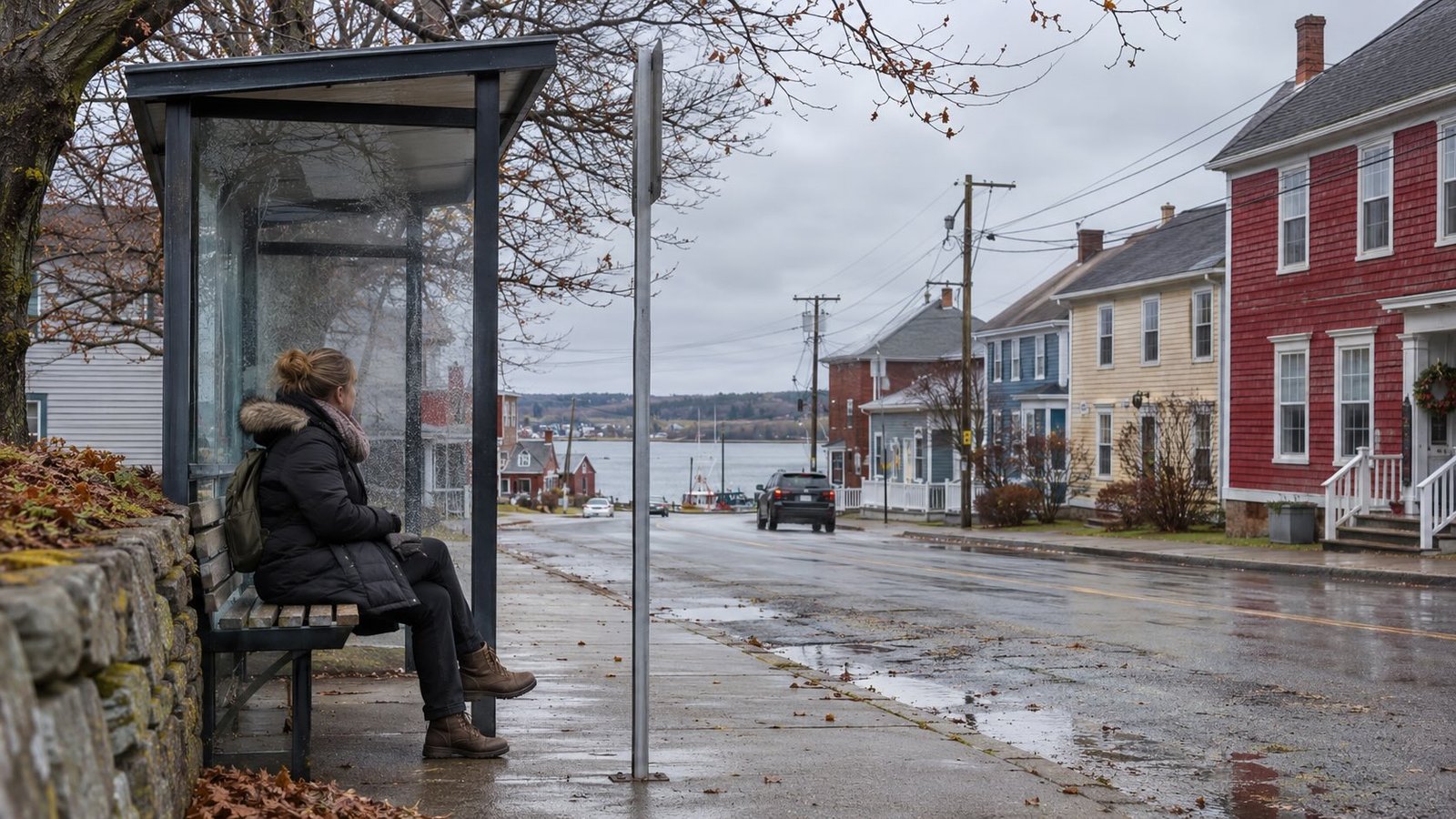
In the town of Pictou, Nova Scotia, the bus comes every four hours from Monday to Saturday. On Sundays, it doesn’t come at all. That timetable deserves a place beside Canada’s 9 November announcement, made in Pictou County, that it was turning its Rural Community Immigration Pilot into a permanent programme. All 14 communities in the pilot are expected to continue when the new programme opens on 1 January 2027. For someone weighing a move from Britain, the announcement opens up a serious possibility. The timetable helps decide where to look for a flat.
Pictou County is easy to misread from abroad. Pictou is a harbour town, while the county also takes in New Glasgow, neighbouring Stellarton and communities such as Trenton and Westville. A job advertised in the county could put you in quite a different place from the one you had in mind when you saw the waterfront. New Glasgow and Stellarton make a sensible first search for someone who wants the option of living without a car. Pictou may suit someone who works in town. A rental in Thorburn can look tempting on price alone, though neither of the county’s two scheduled bus routes goes there.
The immigration route starts with a qualifying job offer from a designated employer. The community must then recommend the applicant before they can apply to the federal government for permanent residence. Applicants also need to meet federal requirements covering relevant work experience, with an exemption for some graduates, as well as language, education and settlement funds. Communities identify the occupations they need, so the same experience that makes someone a good candidate for a job may or may not fit the local programme. A British applicant should also allow for an approved language test. Speaking English every day and supplying the evidence Canada asks for are two separate tasks.
So who’s hiring? The county’s October 2026 list marked four designated employers as recruiting: MacGregor’s Custom Machining, V&E’s Chopsticks Restaurant, the Waterview Restaurant and Bar, and Ocean Sunset Chalets. That gives people with machining or hospitality experience somewhere concrete to start. The list gives recruitment status at employer level, so applicants still need to ask what positions are open, where they would work and whether the employer can support the particular offer through the programme. Michelin, Sobeys Capital and the Nova Scotia Health Authority appeared on the same list without active recruitment through the pilot at that point. Their ordinary careers pages can show vacancies even when their local immigration recruitment status says otherwise.
One of the clearest accounts of the labour shortage came from WearWell Garments. The company began in 1978, when, as its human resources manager recalled, local secondary schools still taught sewing. Changes in schooling and in the Canadian clothing industry made the skills it needed harder to find, and immigration helped it recruit. WearWell itself showed no active recruitment on the October list. Its example explains both the promise and the limits of the scheme. A small employer can have an enduring need for a particular skill and still go months without a vacancy. The permanent programme gives businesses a route they can use when that need arises.
November rental listings offered a starting point for doing the sums. New Glasgow had a one-bedroom flat near the centre advertised at C$1,250 a month, a two-bedroom flat at C$1,500 and new two-bedroom flats at C$2,100. In Stellarton, a one-bedroom flat was advertised at C$1,200 and a three-bedroom duplex at C$1,500. In Pictou, two-bedroom properties appeared at C$2,000 and C$2,300. Those are asking prices from individual adverts, and a cheap listing can disappear before a job offer comes through. Compare what each rent includes, especially heat, and check whether the advertised move-in date works with the employer’s. A short let can give a newcomer time to make that comparison in person, if the budget allows.
The bus makes the strongest case for starting in New Glasgow or Stellarton. Route 1 runs hourly around the two towns, with published operating hours of 7 am to 9 pm Monday to Saturday and 9 am to 5 pm on Sundays. The start and finish times refer to the service as a whole, so the departure from a particular stop matters more than the headline hours. Route 2 links New Glasgow with Westville, Trenton, Pictou and Pictou Landing First Nation. Westville and Trenton get a bus every two hours, while Pictou and Pictou Landing First Nation get one every four. Route 2 runs Monday to Saturday. A missed connection can consume a sizeable part of the afternoon.
A household with one predictable daytime job and a flat on the New Glasgow–Stellarton loop could reasonably try living without a car. An early kitchen shift, a late closing shift or a Sunday start across towns makes that harder. The same goes for a couple whose jobs take them in different directions. Ask for a typical rota before picking a postcode, then check the journey home as carefully as the journey in. If the sums only work with the cheapest flat in a community off the route, add insurance, fuel, maintenance and winter tyres to the comparison. A flat that costs a little more near work may turn out to be the cheaper address.
The most revealing question to ask a prospective employer in Pictou County might be the one that has least to do with immigration paperwork. What time do people usually get home after the Sunday shift? The answer could put Stellarton ahead of a harbour view, make room for a car in the budget, or make a flat within walking distance worth waiting for. A programme can be permanent from the first day of January. The place starts to feel permanent when you know how you’ll get home on an ordinary Sunday.
Post Comment