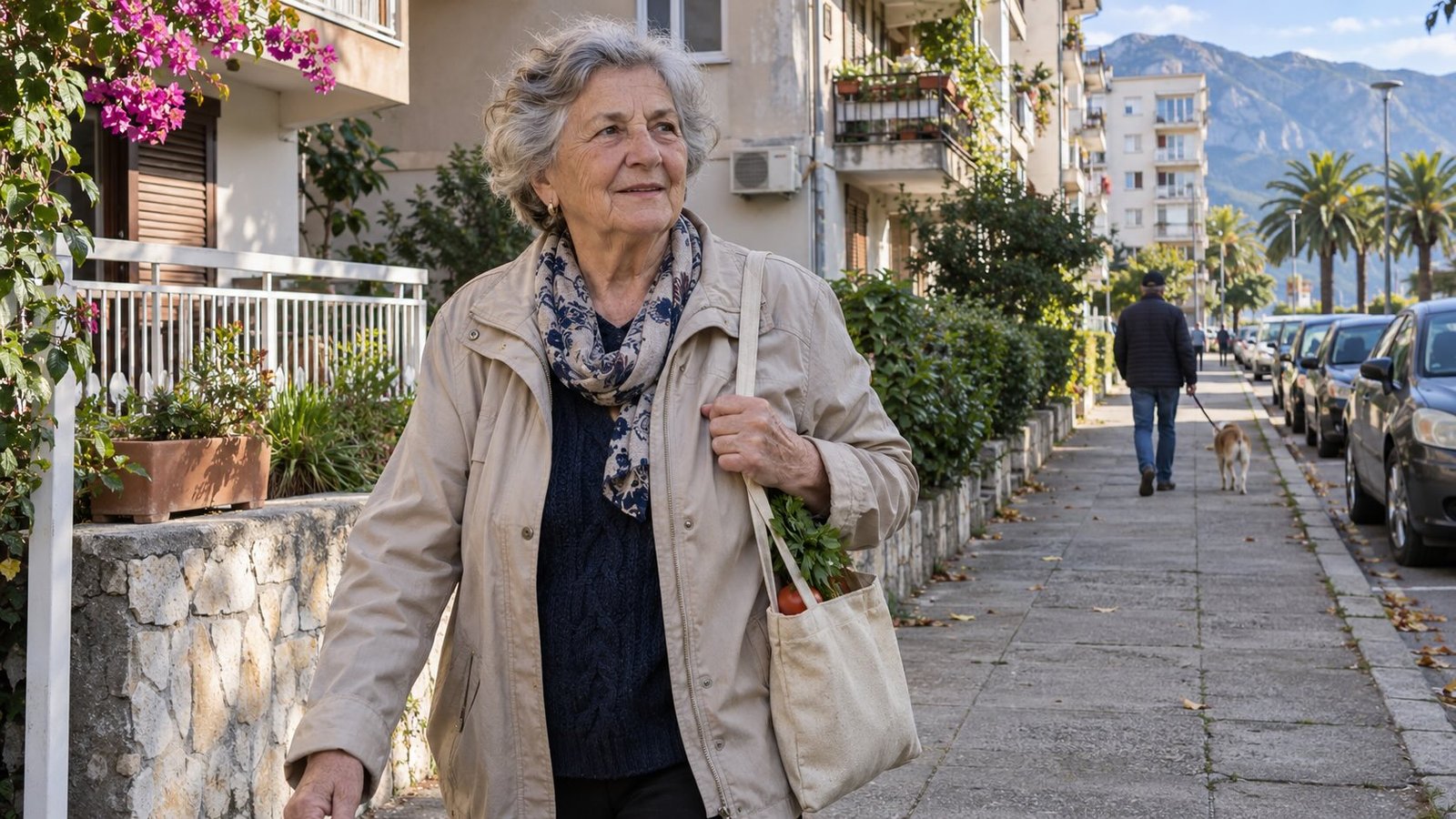
In Montenegro, the difference between a lovely place to spend September and a sensible place to retire can come down to the pavement. Can you walk to a pharmacy with a sore knee? Is there a lift in the building, and does it go all the way down to the entrance? Those questions can change the order in which you shortlist towns. Kotor has the bay and the old stone lanes. Bar has a seafront, a working port and a railway to the capital. Podgorica has the country’s main clinical centre. Each looks more or less appealing depending on what you need to do on a Tuesday.
A full British citizen passport gets you up to 90 visa-free days in any 180-day period, enough for a proper trial stay. Montenegro is outside Schengen and keeps its own count. Visitors must register within 24 hours, so check that your accommodation provider has done it. For a permanent move, Montenegro has no dedicated retirement visa based on pension income. A British retiree with a qualifying family connection may have a family reunification route. For someone without that connection, buying a qualifying home is one of the more realistic ways to apply for temporary residence. Renting gives you somewhere to live while you try the place out. You’ll need a separate legal basis to stay long term.
Since January 2026, a new applicant relying on property ownership and holding only British citizenship generally needs a property with an official transfer-tax valuation of at least €150,000, about £125,000. The figure on the estate agent’s particulars can differ from the valuation that counts. The earlier €200,000 proposal made headlines, but €150,000 is the threshold that took effect. Ask the Montenegrin embassy about the long-stay D visa and the order of the paperwork before paying a deposit. Expect to document your accommodation, means and health insurance. If you’re moving as a couple, check the application basis for each partner, especially if only one of you will be on the title.
The property route gives you a temporary permit to renew, generally annually, and local employment requires separate permission. Five years is the usual starting point for permanent residence, subject to qualifying residence and limits on time abroad. Have the local authorities confirm how your intended permit and absences would count, especially if you expect to spend months at a time with family in Britain. Citizenship is a separate process. If your plan involves a house with an orchard, ask an independent lawyer to check the land classification as well as the title. Foreign buyers face restrictions on agricultural and forest land, with a limited exception where a qualifying residential building forms part of the purchase.
Bar and Podgorica make a useful comparison because the rent needn’t decide it. In early November 2026, one-bedroom flats advertised for long-term rent had a median asking price of about €500 (£420) a month in both cities, compared with €650 (£545) in Budva and €675 (£565) in Tivat. Those are listing snapshots for one-bedroom homes, before utilities. On the coast, ask for a contract that explicitly covers July and August. During a viewing, check the heating, look behind the wardrobes for damp and price the flat you would actually want to occupy year-round. A cheaper hillside address can quickly acquire a taxi bill.
The UK State Pension continues to receive its usual annual increases in Montenegro. In 2026–27, the full new State Pension works out at roughly €1,250 (£1,045) a month before tax, averaged across the year. At €500 rent, a single person has about €750 (£625) left for everything else. Try pricing a month of groceries, utilities, insurance and prescriptions, then add a monthly allowance for flights home and any car costs. Use your own pension forecast, especially if you’ll retire before State Pension age. Your bills are in euros, and a fall in sterling can absorb an annual pension increase before you’ve had a chance to spend it.
Tax residence has its own rules. Spending at least 183 days in Montenegro in a tax year can make you tax resident, and where you have your home or centre of interests can matter sooner. The UK and Montenegro still apply the UK–Yugoslavia double taxation convention. How it applies depends on the type of income, so check the treatment of each pension, any lump sum you plan to draw and any rent you’ll collect from a UK property. Get those figures before deciding how much equity to put into a Montenegrin home. A budget built on gross pension income can look quite different once you know what reaches your bank account.
Healthcare can settle the question of where to live. The reciprocal agreement gives eligible UK visitors access to some state treatment, with a GHIC or EHIC among the documents you can use. For a move, establish what the Montenegrin health fund will cover in your circumstances. A British State Pension brings no automatic S1 route in Montenegro, so price resident health insurance if you lack public cover. Ask for written terms on existing conditions, renewals at older ages and treatment outside the country. Bar has a general hospital and trains to Podgorica. If you need regular specialist care, find the clinic that would actually treat you and make the journey before choosing an address.
On the Bay of Kotor, try your errands during the summer traffic and again on a wet winter weekday. In Bar, see how much of your routine you can manage on foot. Inland, a quieter address can mean colder winters and more driving. UK licence holders who become residents generally have six months to exchange their licence if they wish to keep driving. Check winter flights to the part of Britain you actually need to reach, including the trip to the airport at either end. Leave time for a Montenegrin lesson, too. A little of the language helps when you’re arranging a repair, discussing a prescription or getting to know the people upstairs.
Montenegro could suit retirees who have a clear residence route, some room in the budget and the inclination to build a routine locally. A single pension can feel stretched once insurance and family visits enter the calculation. Someone who needs frequent specialist care may find the choice of address narrower than it first appeared. Spend several weeks in one ordinary flat through a stretch of winter, within the visitor allowance. Shop, take the train, price a flight home at short notice and walk to the pharmacy in the rain. If the place still feels right on that Tuesday, you’ll have learnt something worth knowing before you buy.
Post Comment